The research focuses on practical decisions in architecture, engineering and construction.
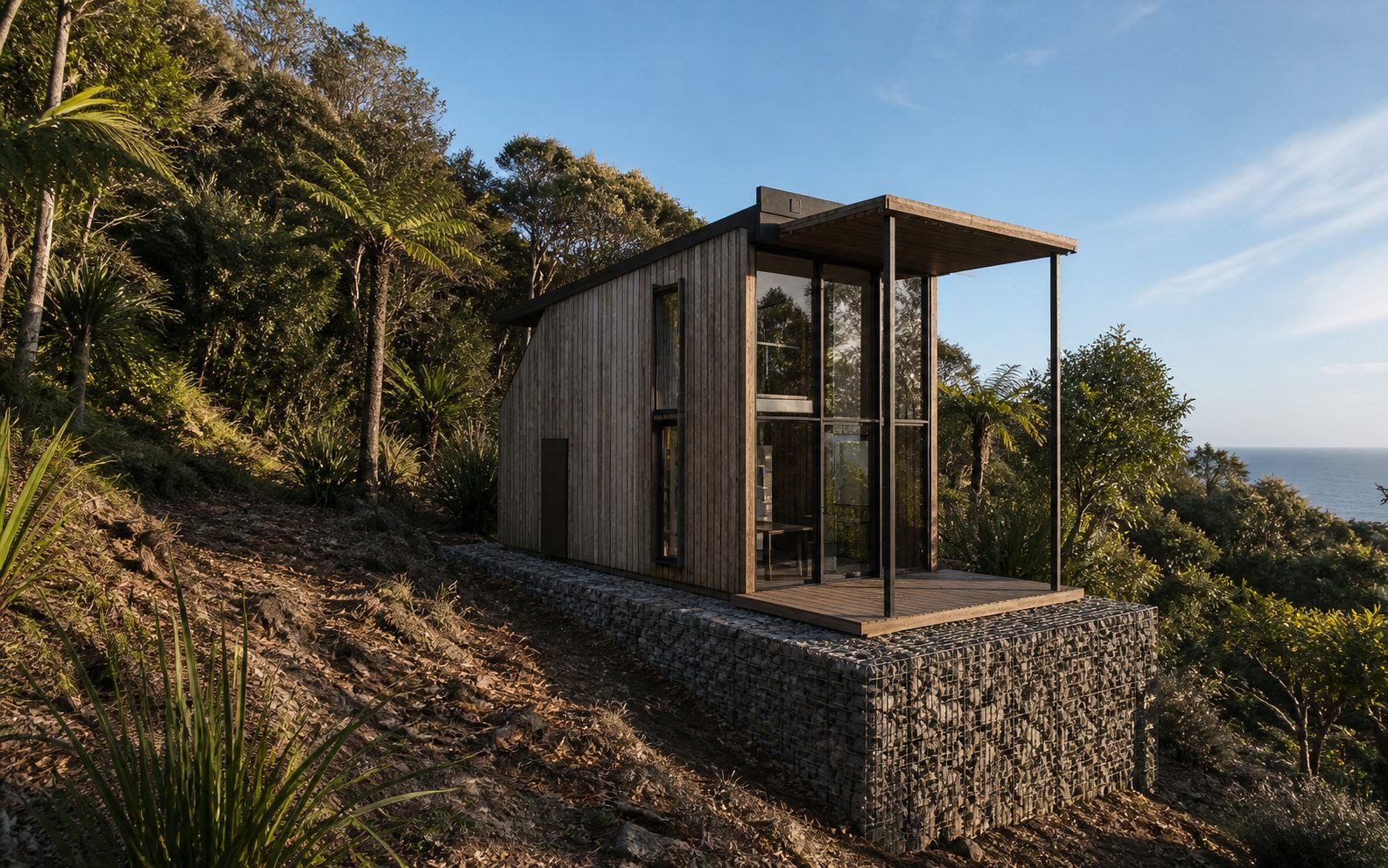
An Aotea land listing became a reviewed early design study.
A hut on 24 hectares of bush, developed from a land listing into an early design study. Open site data helped compare possible locations, two concepts were built on the real terrain, and each stage was reviewed and refined by a person. The result includes a drawing package, a cost range and a clear record of five checks still open.
The Aotea study was also prepared as a 28-page book.
The same Aotea work was arranged as a 28-page volume, a short walkthrough and a detailed page. The note considers how each format changes the way someone encounters and responds to the design.
The first day of the work is also available as a field note: see how the study developed over one working day →
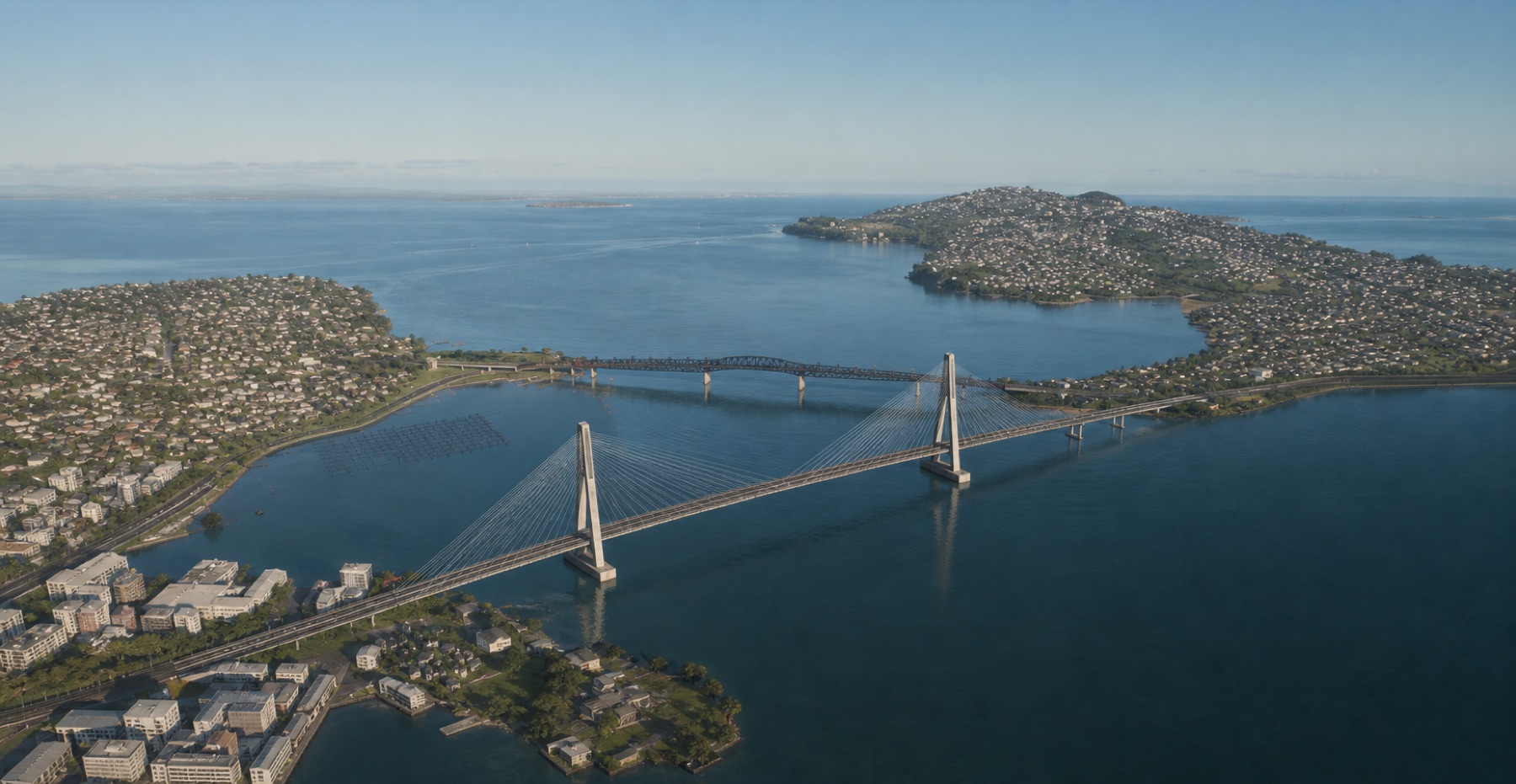
The bridge model exposed a path conflict and produced a ten-sheet record for specialist review.
The first anchorage arrangement reduced the walking and cycling path from 3.0 metres to 2.2 metres. Revision P02 corrected five defects and carries seven open holds.
Read the study →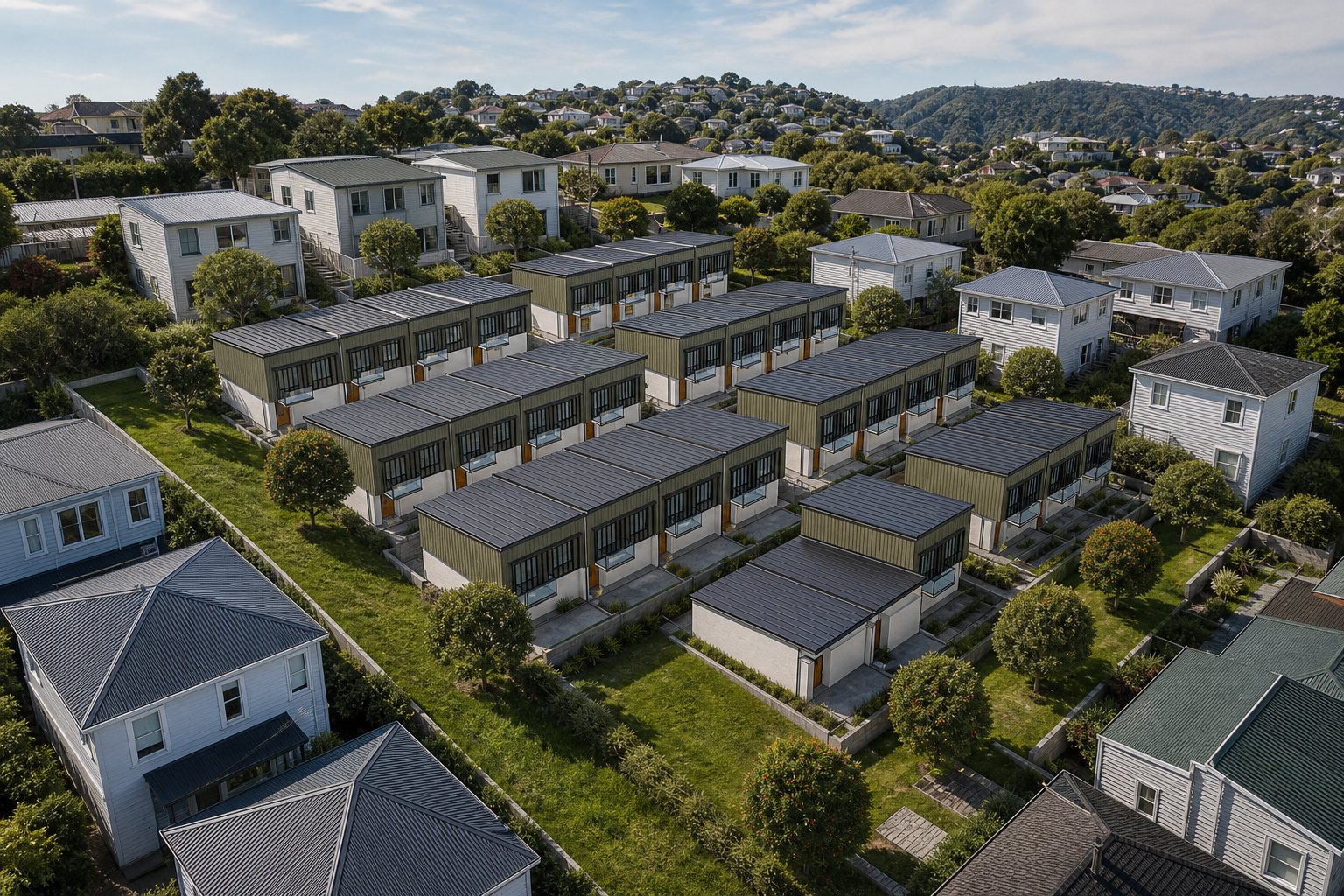
A property listing is more useful when it arrives with a feasibility study.
Open terrain data changed the site reading, the model tested 30 homes, and the commercial scenario kept its assumptions and outstanding checks visible.
Read the study →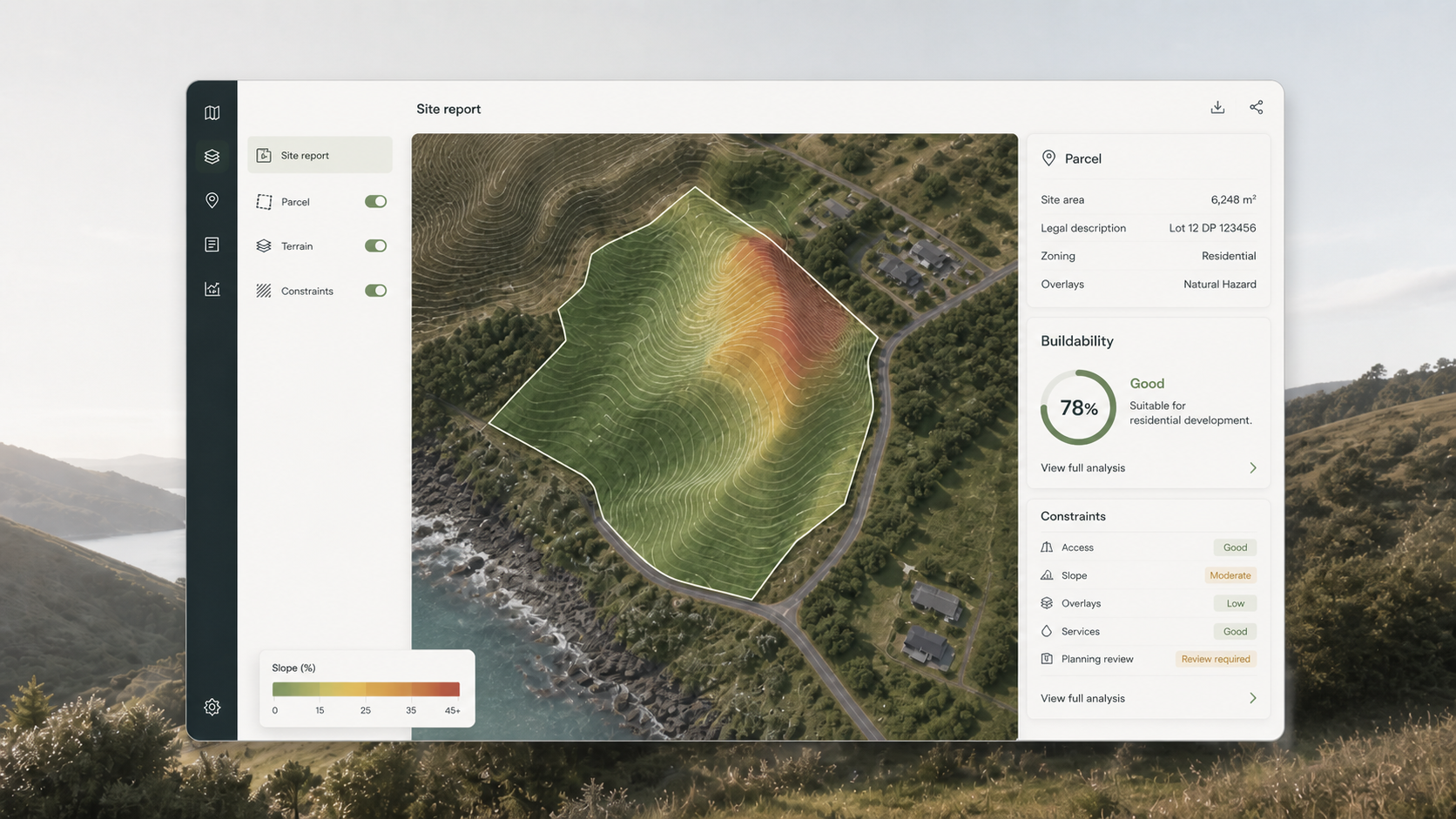
A useful first site record shows the evidence, its limits and what still needs checking.
The prototype assembles parcel, terrain, planning and hazard records while preserving source, age, reliability and missing evidence.
Read the note →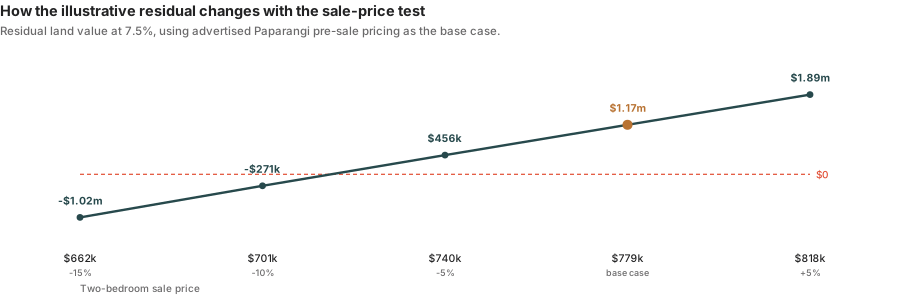
A reviewable early estimate keeps quantities, rates, assumptions and uncertainty connected.
The Paparangi scenario shows how quickly a headline residual changes when one sale-price assumption moves, and which cost and market inputs still require verification.
Read the note →Products and prototypes tested in real workflows.
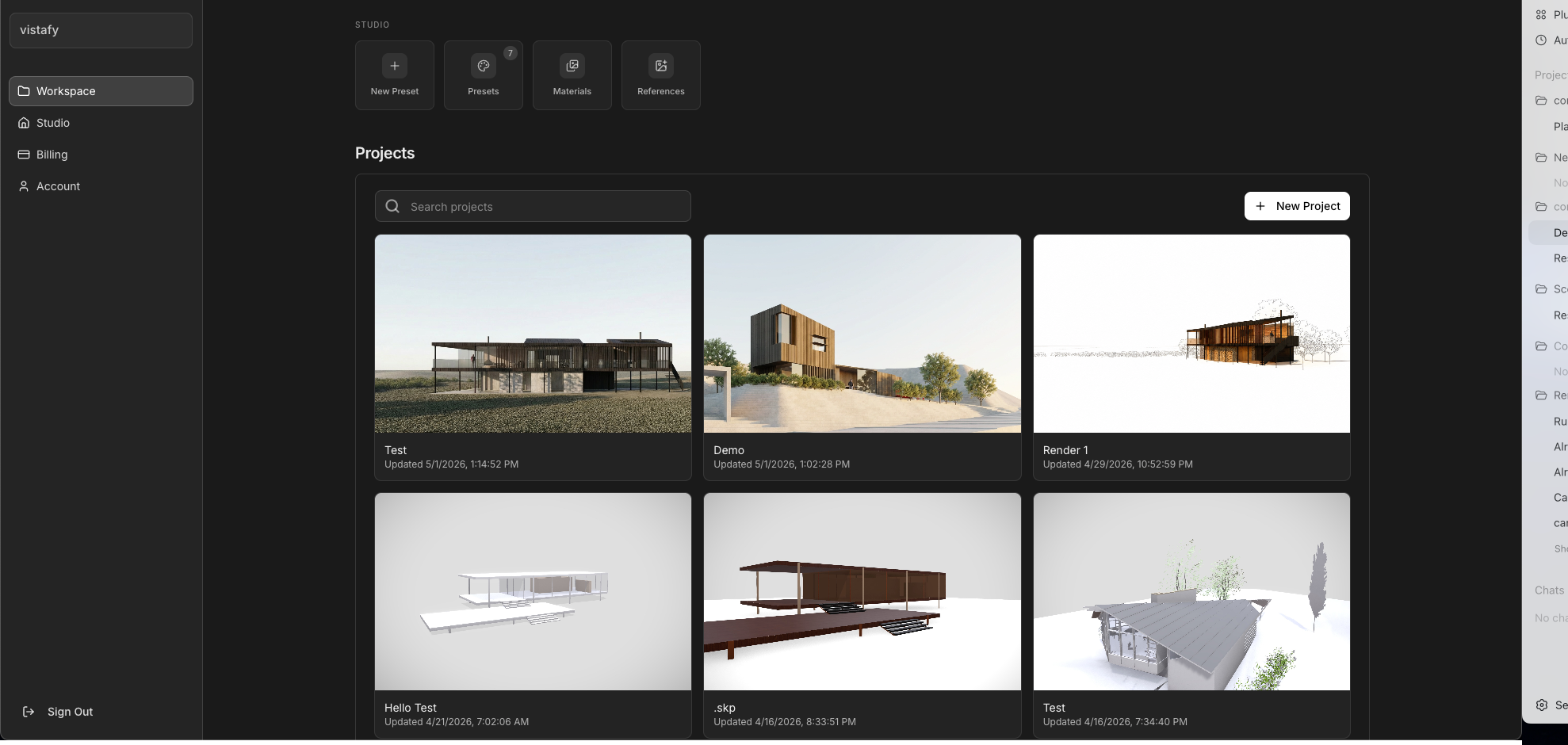
Vistafy: rendering and motion inside the practice.
Architects turn sketches, references, and finished renders into client-ready visuals and walkthroughs without leaving the project workspace. The lesson is that AI is more useful when it holds context across iteration, review, and presentation.
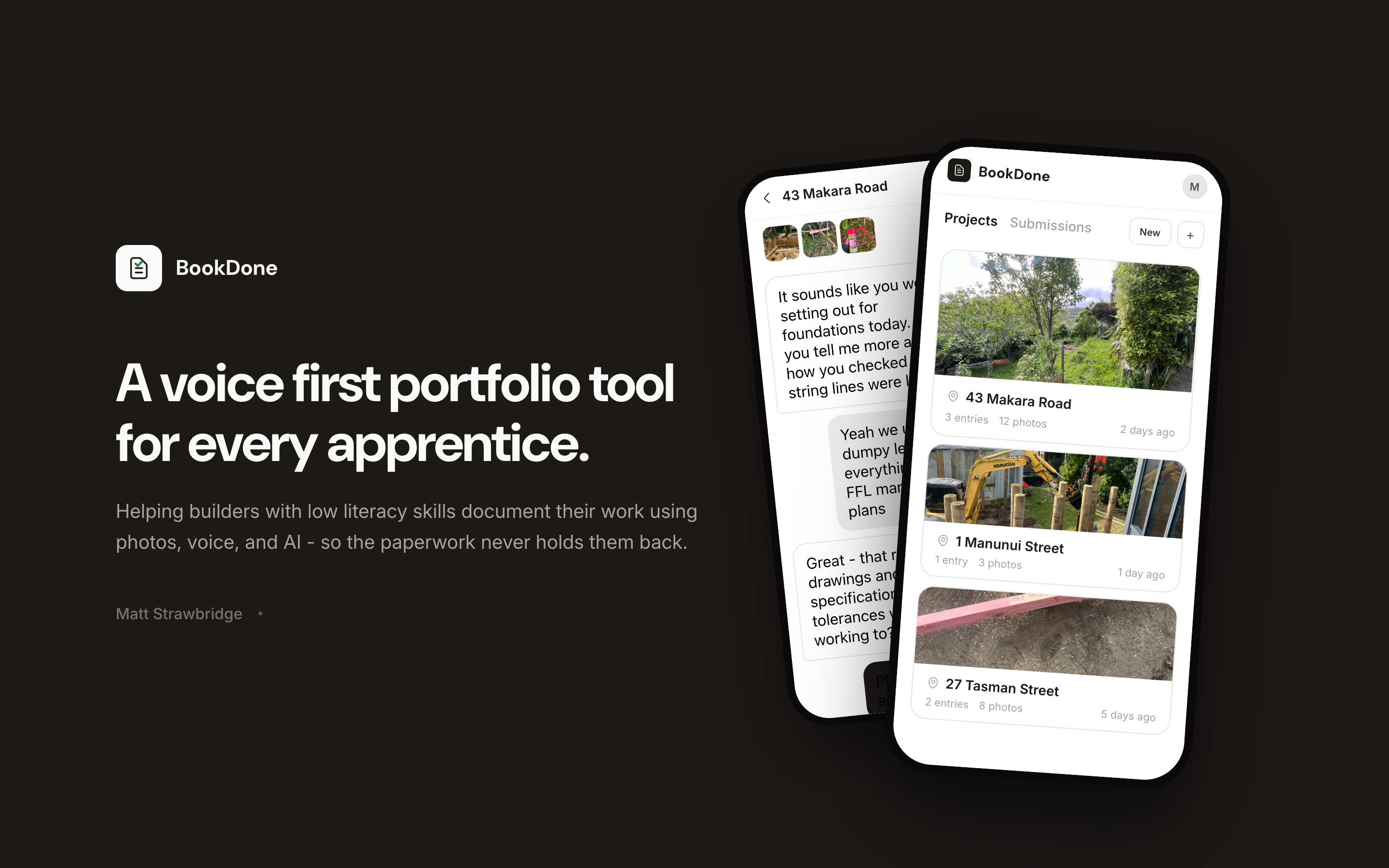
BookDone: voice and photos into apprentice bookwork.
Site work gets captured in the way tradespeople already work: photos, voice notes, and short follow-up questions. The system turns that field evidence into formatted BCITO submissions that still need review before they count.
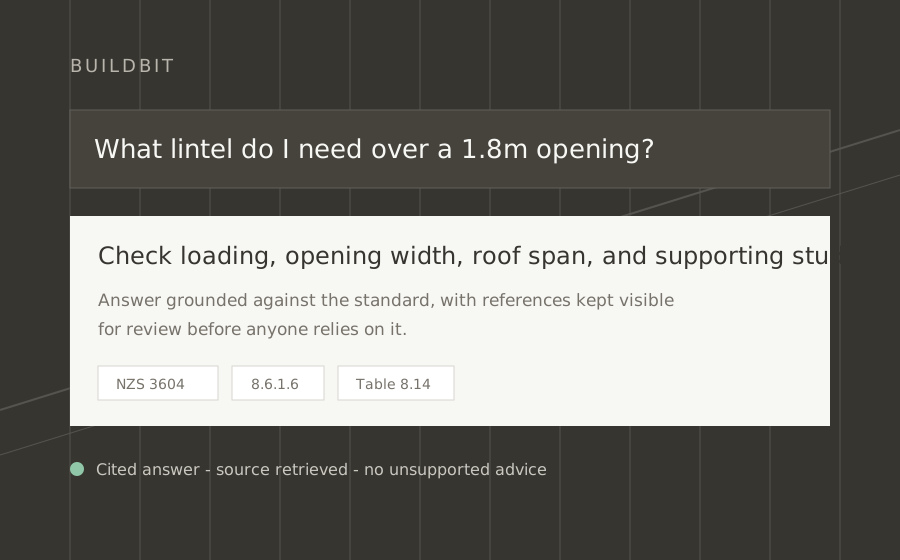
Buildbit: NZS 3604 answers with the clause attached.
NZS 3604 became askable in plain language, under a formal Standards NZ license, with answers tied back to clauses. The useful lesson was also the boundary: in compliance work, almost-right is still a liability.
NZ site intelligence: a source-backed layer for early feasibility.
Parcel, terrain, constraints, and missing-data states get pulled into an early feasibility layer. The aim is a practical source pack that helps a team decide what needs review before concept work goes too far.
> set objective
> agent planning...
> agent 47 / 100
> APPROVE → continue
> next task
Command Center: agent work behind approval gates.
A web dashboard for running AI agents like a team. Set an objective, the agents plan and execute, and every plan and result waits on human approval before it counts.
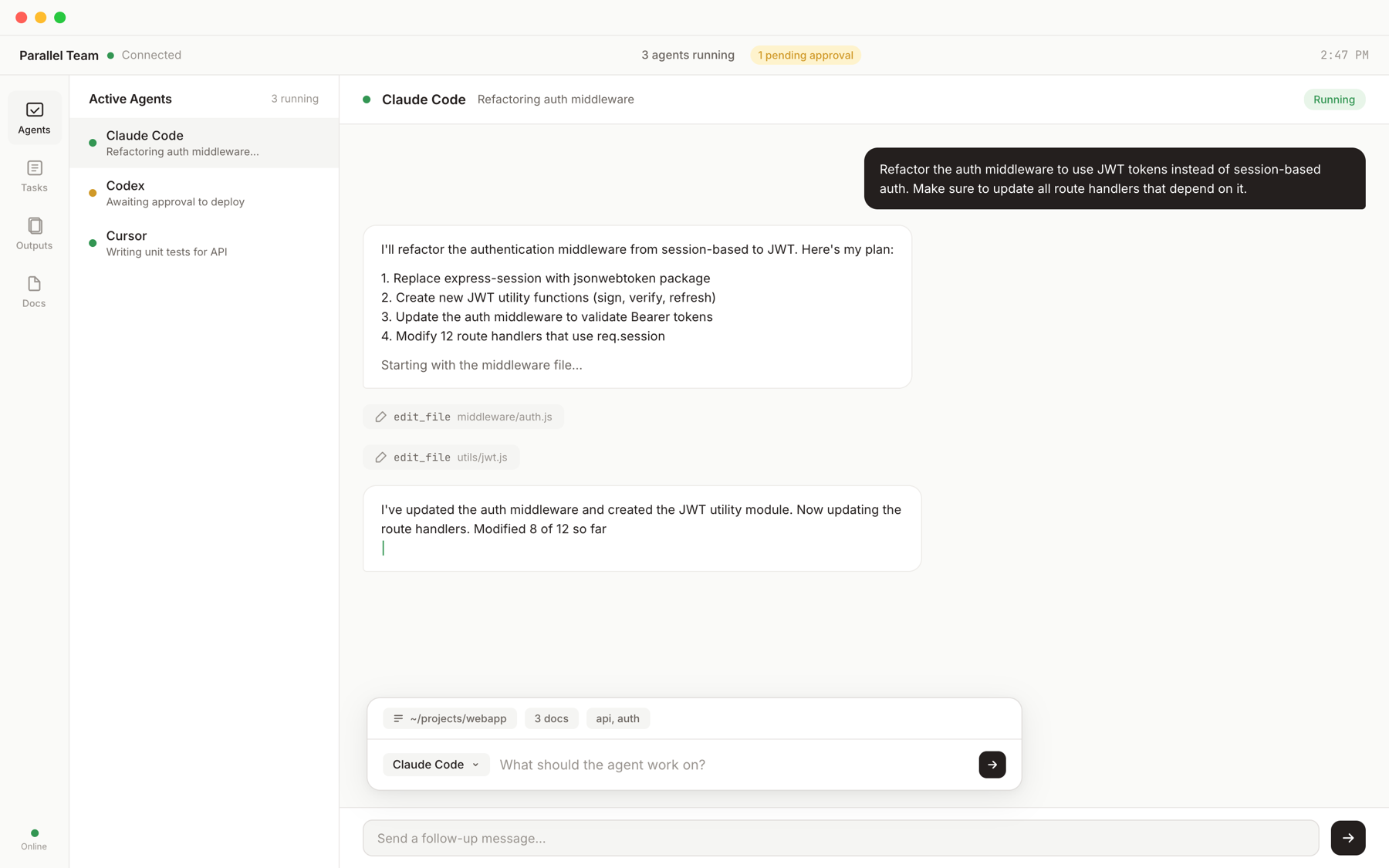
Parallel: reviewer corrections carry into later agent runs.
A native desktop app that drives your local coding agents, Claude Code, Codex, and Cursor, from one place. Actions wait on approval before they run, and every correction is carried into the next run.